Conference by Assist. Prof. Dr. Mevlüt Günler on “The Western Turkic World and Karamanoğlu Mehmet Bey”
Tarih: 10 Haziran 2026
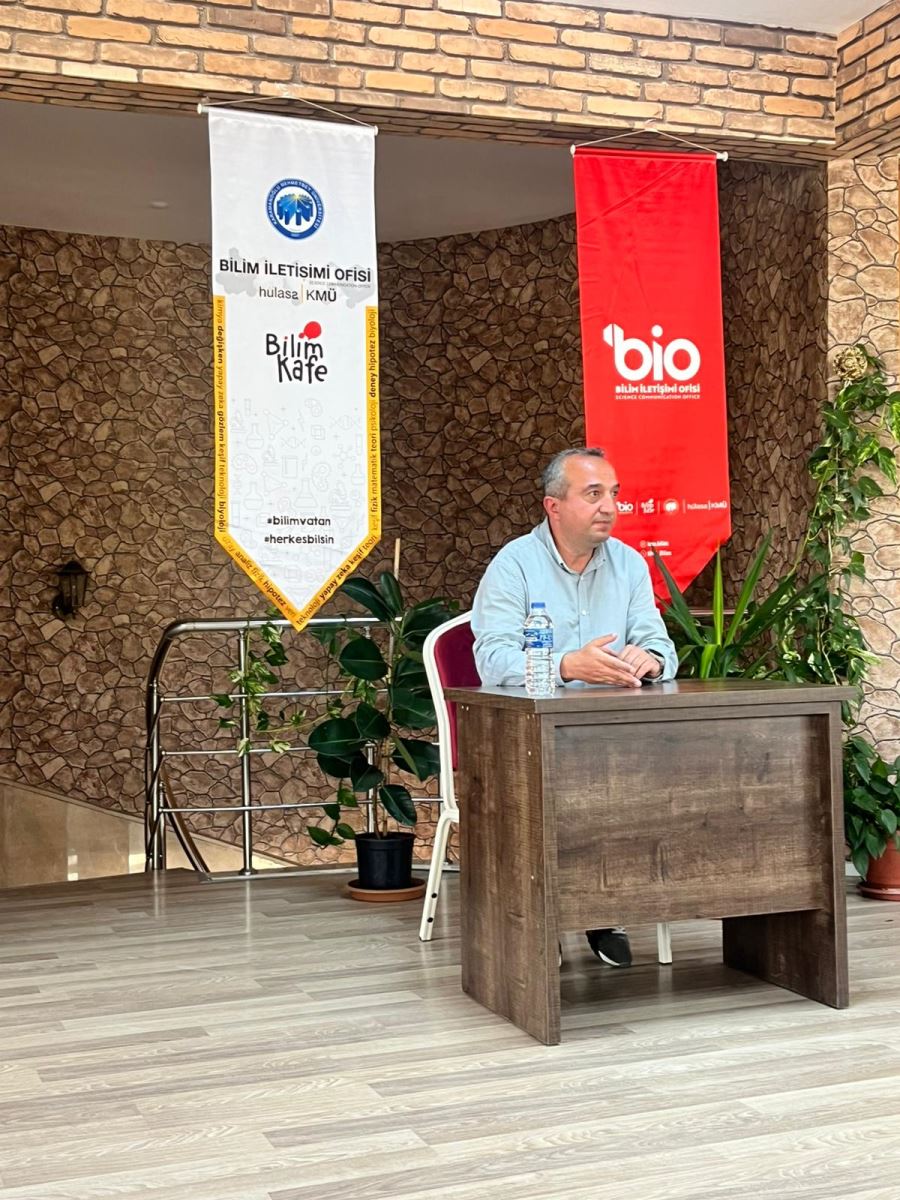
One of the faculty members of our department, Assist. Prof. Dr. Mevlüt Günler, met with participants at the conference titled “The Western Turkic World and Karamanoğlu Mehmet Bey,” organized within the scope of the Science Café activities by our University's Science Communication Office. The conference, held at KMU Yunus Emre Cultural House on June 9, 2026, at 3:00 p.m., featured Dr. Günler’s evaluations on the historical development of the Western Turkic World and the place of Karamanoğlu Mehmet Bey in Turkish political and cultural history.
In his speech, Assist. Prof. Dr. Mevlüt Günler stated: “With the withdrawal of the Göktürks from the stage of history, the Turkic world diverged into two distinct social and political trajectories: Eastern and Western. The Western Turks were shaped by the Seljuk and Ottoman states established by the Oghuz Turks, while the Eastern Turks developed along the lines of the Uyghur, Karakhanid, and Timurid traditions. Although the Seljuks were founded in accordance with the traditional Turkish conception of statehood, the cosmopolitan social structure of their realm and the circumstances of the age gradually transformed them into a medieval Islamic state. As a result of this transformation, Persian became the administrative language of the state, and the bureaucracy came to be dominated by officials of Persian origin or those educated within the Persian cultural sphere. The increasing influence of Persian bureaucrats in government alienated the Turkmens—who had constituted the principal force behind the foundation of the state—from the political center, leading to prolonged struggles between the center and the periphery.
The situation remained largely unchanged in the Anatolian Seljuk State. During this period, the Mongol invasion and the inclination of the existing bureaucracy toward Mongol interests prompted Karamanoğlu Mehmet Bey to mobilize the Turkmens under the banner of independence. Konya, the capital, was first liberated from Mongol influence, and through the proclamation of a decree, native statesmen were incorporated into the administrative system. Consequently, the Turkmens, as the founding element of the state, regained a central role in governance after a long period of exclusion from the center-periphery competition.
However, the Mongols, who perceived this transformation as contrary to their interests, moved decisively against Mehmet Bey in order to maintain their dominance over Anatolia. In short, Mehmet Bey was martyred in this cause, yet the flame he ignited spread throughout Anatolia and continued to grow. The Anatolian principalities, such as the Germiyanids and the Aydınids, and ultimately the Ottomans, organized their administrative systems around Turks or representatives of the Turkish cultural sphere. At the same time, Western Turkish, written in the Arabic script, emerged as the language of state administration.”
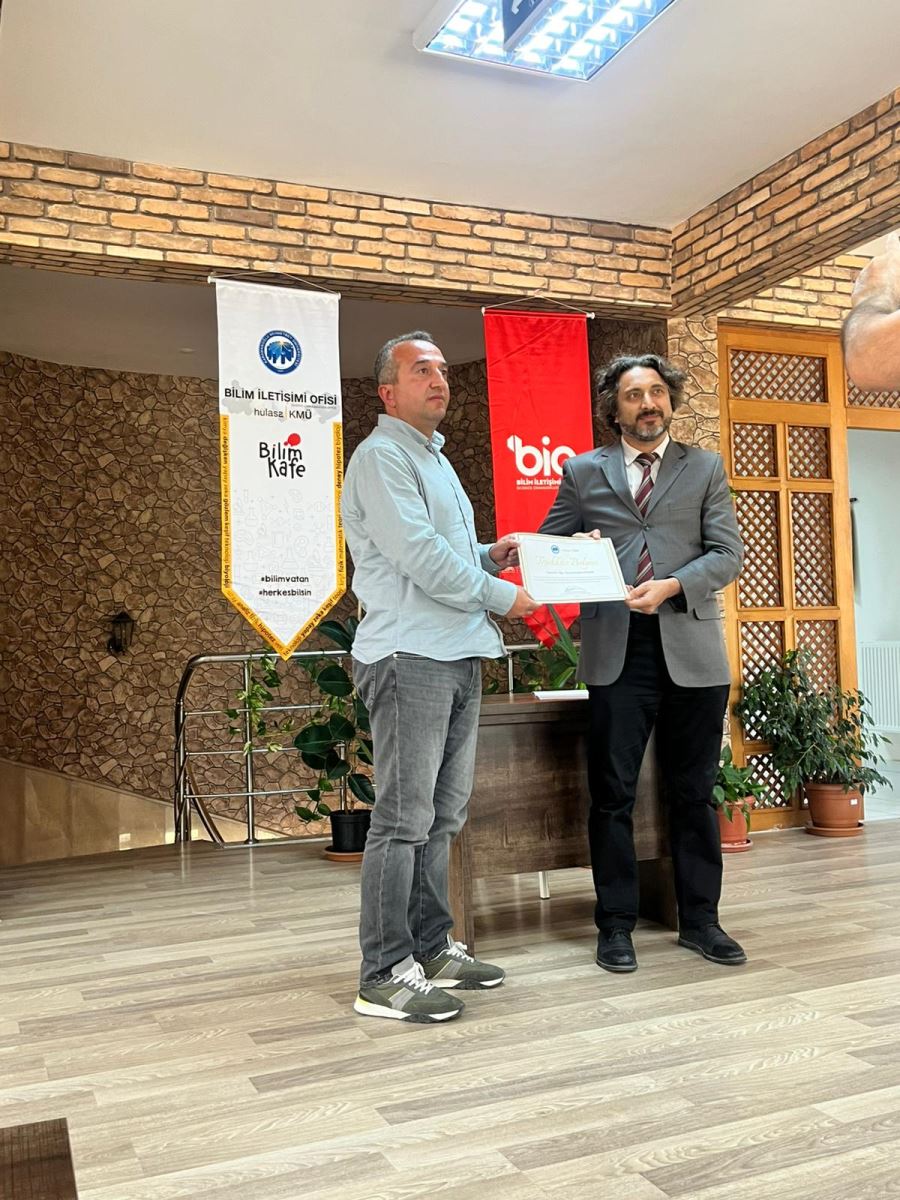
At the end of the conference, which was followed with great interest by the participants, Vice Rector Prof. Dr. Murat Mayda presented a certificate of appreciation to Assist. Prof. Dr. Mevlüt Günler. The program concluded with a commemorative group photograph.
Okunma sayısı: 160 kez okundu